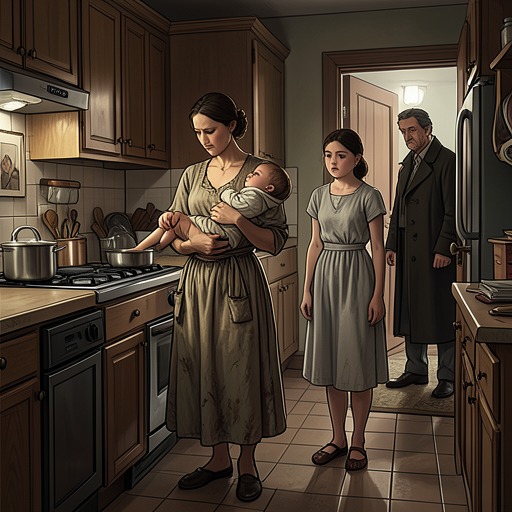
Hanka Takes Over the Boryna Farm
The PeasantsHanka’s takeover of Boryna’s farmstead begins in the disorder after the forest battle, when Maciej Boryna lies gravely wounded, Antek is expected to be taken away, and the family’s land and property seem vulnerable to whoever can claim them first. Hanka acts before grief or uncertainty can leave the household to its rivals: she returns with her children, establishes herself in the cottage, and takes on the farm’s work and defense. The episode makes her labor a form of practical authority, secured not by permission but by her presence and persistence.
Causes and Background
Hanka’s return follows a period of severe hardship in her own household. As winter approached, village families struggled to meet taxes, communal contributions, debts, and other expenses at once; even households with fifteen morgen considered selling a horse or cow to find ready money. In the later winter, Hanka and Antek were reduced to potatoes and salt, had no cash, and faced the prospect of selling their cow. Antek refused hired work, leaving Hanka to imagine working herself to the bone to keep the animal and carry the family through until spring. Their poverty was compounded by the unresolved injury of being turned out of the paternal homestead: three weeks later, neither had forgotten the expulsion.
The crisis at the farmstead changes the stakes. News from the forest first comes in contradictory, alarming cries: one young man announces that the villagers have beaten the manor, while Dominikowa’s exhausted son shouts that Boryna, Antek, Mateusz, and the others are finished. Hanka is terrified until she sees Antek alive beside his father’s cart. Maciej is covered in blood, livid and nearly unconscious. Her father, Bylica, points out the immediate danger: the old man may die, Antek may lose control of himself, and no one is guarding the farm. He warns that Antek’s Brother-in-law may move in and prove difficult to dislodge.
Hanka’s Return and Claim
Hanka responds at once. She goes to the cottage, gathers the children and whatever clothes are close at hand, and leaves the remaining belongings with Weronka. She moves into her old place, on the other side of Boryna’s cottage, while the village is still caught up in the battle’s aftermath—some celebrating, others nursing their wounds. Ambrozy is caring for Maciej, and people have not yet dispersed. Hanka, by contrast, quietly settles in for good.
Her claim is both familial and material. She regards the land as Antek’s too and sees the incapacitated Maciej as close to death. She also understands that whoever first takes possession of the inheritance may be hard to remove and may have the law on their side. When Antek’s Brother-in-law shouts and threatens to bar her from entering, Hanka refuses to treat his opposition as decisive. She guards the property as her own and as protection for her children, anticipating that Maciej may die and Antek may be taken away. Rocho’s warning reinforces her sense that she cannot rely on someone else to defend the household.
Running the Farm and Contesting Rivals
Taking possession does not mean taking over an orderly, uncontested home. Jagna has a doubtful claim to care for Maciej, but she cannot bear to remain in the cottage for long and often goes out, leaving Józka to watch him while people are present. Hanka therefore assumes the sick man’s care as well as the farm’s wider responsibilities. Antek’s Brother-in-law and his wife visit repeatedly, but Hanka sees their attention as surveillance: they watch to make sure she takes nothing and wait in case Maciej speaks and assigns his property.
The contest becomes physical in its everyday details. Antek’s Brother-in-law takes whatever he can lay hands on; Hanka has to wrest an old halter or plank from him and watch his movements. Their quarrels and angry accusations recur from day to day. Alongside this struggle, Hanka faces opposition from Jagna and Antek’s Brother-in-law’s circle, while the Voyt supports Jagna and the priest is against Hanka, urged on by Dominikowa. Her position is therefore not simply that of a returning daughter-in-law: she must establish her authority amid competing claims to the household, the sick man’s care, and the inheritance.
Labor, Change, and Consequences
Hanka works from dawn until late at night, snatching only food, sleep, and rest. The labor is difficult because she is unused to directing every aspect of the farm, naturally timid, and accustomed to being cowed by Antek. At times the burden overwhelms her. Yet she does not relinquish her claim. Within two weeks, the farmstead is running according to her will and direction. The change is consequential: an expelled and impoverished woman has made herself the household’s effective manager, not through a formal settlement but through continuous work and vigilant defense of the land.
The later spring exposes the larger importance of that labor. With the working men in gaol, Lipce has too few hands to work the fields. Women must manage gardens, livestock, births, and the many other tasks of the season, while the ground lies fallow for want of labor. When neighboring villagers arrive to help, Hanka and the other women direct them into the fields. The empty land revives as carts and ploughs move across it; after the first furrows are cut, the workers sow seed in a solemn, prayerful hush. Hanka’s takeover belongs to this wider passage from household emergency to communal survival: her defense of one farmstead is part of the struggle to keep land, labor, and the next harvest from being lost.